Red, Green, or Christmas?
Few things capture the spirit of New Mexico like its chile. More than just an ingredient, chile is woven into the state’s identity, spicing its cuisine, shaping its traditions, and influencing its arts throughout the community.
The smell of roasting chile drifting through the air each fall, marks the change of seasons as surely as the golden aspens along the mountain meadows. That’s the time when families gather around kitchen tables to peel, seed, chop, and share stories, passing down recipes that carry the taste of home pride. Whether it’s green or red, fiery or mild, chile connects New Mexicans to their roots, their land, their history, and to each other. From roadside stands and farmers’ markets, to family kitchen gardens and restaurant menus, chile is not only food, it’s a symbol of belonging; it’s southwest comfort, it’s home. Anywhere it’s served in the world, green or red will instantly make New Mexicans feel at home.
“Chile enhances everything it touches,” says chef Joseph Wrede. “It’s incredibly versatile, adding flavor, color, character and authenticity to every dish, from burritos to hamburgers and stews. It can turn a simple meal into a celebration.”
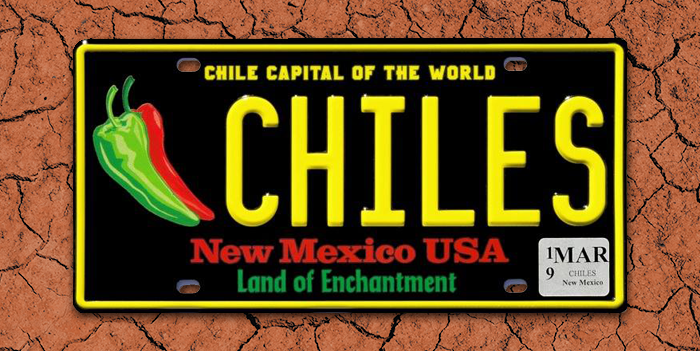
The state now produces about 80% of all chile peppers in the US, an achievement proudly emblazoned on the official license plate proclaiming New Mexico the chile capital of the world. Even the special spelling was addressed by long-time senator Pete Domenici, acknowledging the difference between chile with an ‘e’ and chili with an ‘i’. He had ‘chile’ entered into the Congressional Record as the official spelling for New Mexico chile in 1983.
Like coffee beans and wine grapes, chile peppers absorb qualities from the land, and the state’s high desert climate, long sunny days, cool nights and volcanic soil, combine to give New Mexico chile its characteristic taste. As chef Joseph points out, “It’s also very versatile, because different varieties give it a flavor profile that ranges from mild to extremely hot. So it’s not only a great addition to burgers, burritos and stews, but it can also be used in chocolates, desserts, ice cream, even beer and wine.”
Another good thing about chile is that it adapts to year-round use. It grows in the summer time, starting out green before some varieties turn red. It’s harvested in the fall and can then be dried, made into ristras, frozen for use throughout the winter, or powdered for use as a spice or quick sauce. “Traditional, straight up red chile pods, onion, garlic and water, boiled then puréed, may be both the simplest and best tasting vegetarian sauce the world has ever known,” Wrede says. “It actually thickens itself, no roux required. This isn’t Louisiana influenced American food; it’s new Mexican influenced American cuisine.”
One of his favorite dishes is chile relleno, because it incorporates the element of Christmas without having to choose. A roasted green chile pepper, stuffed with asadero cheese and spiced with cilantro, is pan-fried in egg batter and served with red chile sauce. “New Mexico red chile has a really vibrant color, just like our sunsets,” he says. “It really sparkles and the sauce is exceptional. It makes a great addition to all kinds of dishes, from exotic ones like elk, to simple meats or vegetables.” So if you want to turn ordinary dishes into something extraordinary, stock up on fine red chile powder and follow the recipe below.
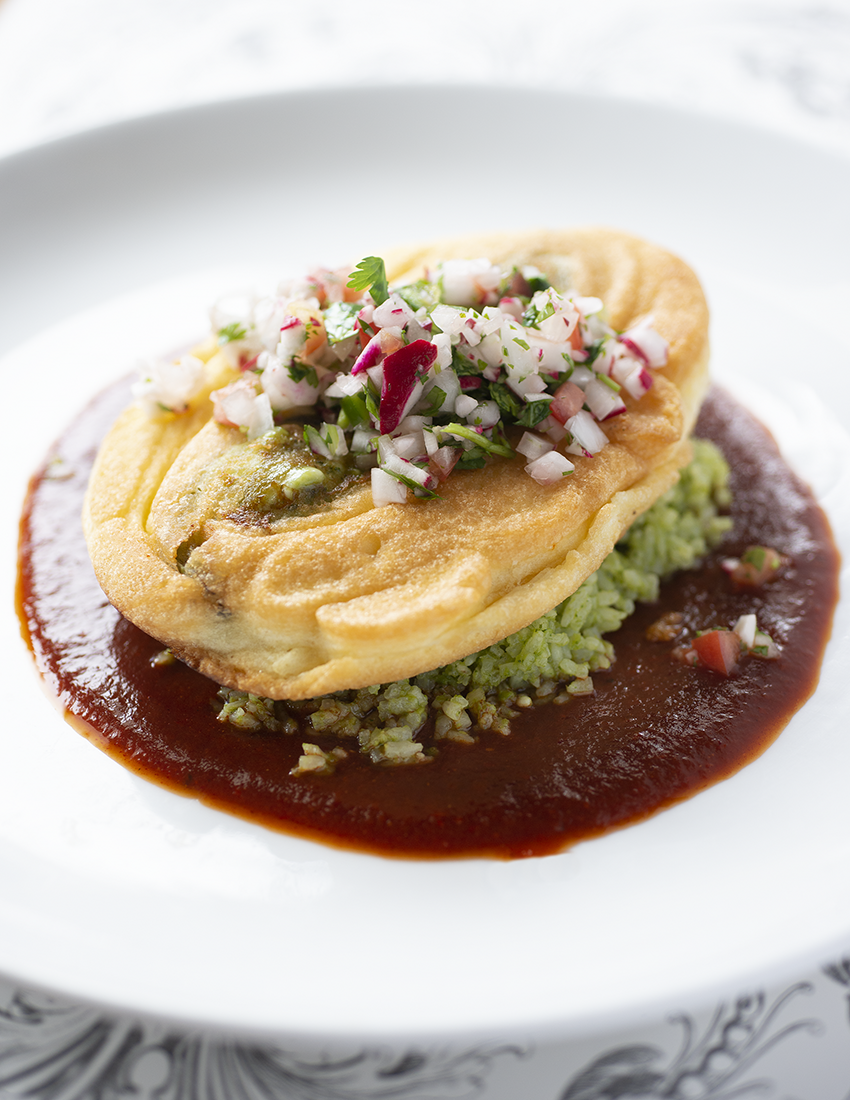
Chile Relleno with Red Chile Sauce
Chile Relleno – preparation:
Place 8 to 10 green chiles on hot grill. Turn until skin is black and blistered.
Remove and place in bowl. Cover with plastic wrap to steam.
When cool, carefully peel off skin to preserve natural shape. Open a slit along the side of chiles and rinse out seeds in a bowl of water – not running water.
Filling:
In a food processor, place 2 cups of asadero cheese and 1 bunch of cilantro. Pulse until ingredients are fully integrated.
Place approximately 4 oz. of the cheese mixture into each chile, and re-form into its natural shape.
Relleno Batter:
Separate 3 eggs into whites and yolks. Place whites in mixing bowl and whip until stiff.
Place yolks into separate bowl and whip until foamy, about three minutes. Fold
egg yolks, 2 tablespoons of flour and 1 tablespoon of salt into stiff egg whites.
Method:
Pre- heat oven to 400 degrees, and place a sauté pan over medium heat. Thoroughly coat sauté pan with 1 tablespoon of cooking oil.
Brush chiles with batter and place in hot pan. Pour a quarter cup of batter over each one – it should resemble an omelet. Make sure not to crowd the pan. (I advise doing no more than one or two rellenos per pan.)
Cook chiles for two minutes, then turn and cook for another two minutes.
Place relleno pan in oven and bake for an additional 3 minutes.
To serve, place on top of puddle of red chile sauce and pillow of green rice (see recipe below.)
Red Chile Sauce:
Boil 1 pound of red chile pods, de-stemmed and de-seeded, in 2 quarts of water for 10 minutes. Drain water and discard.
In a large sauté pan, over medium heat, add 2 teaspoons of cooking oil and sauté one finely diced white onion; four cloves of chopped garlic; 1 teaspoon each of cumin and coriander, until golden brown.
Put ingredients into blender with the red chile pods. Slowly add warm water until the consistency is smooth and sauce-like. To refine texture, push thru’ a fine mesh strainer, and season with salt to taste.
Green Rice:
Place in blender: ½ cup water, 1 bunch of cilantro, 1 bunch of parsley, ¼ cup of chopped chives, 1 garlic clove and 1 sliced jalapeño pepper.
Pulse until emulsified, adding olive oil as necessary.
In a clean mixing bowl add two cups of jasmine rice and rinse three times with cool water. Place rice in pan with enough cool water to cover, and bring to a boil.
When boiling, place lid on top of the pan, and over medium heat, cook rice for 8 minutes. Keep pot covered, turn off flame and let stand for 15 minutes.
Add green emulsion to rice until thoroughly integrated.