As the seasons change and leaves start to fall, this is the time to capture summer’s abundance of fresh fruits and vegetables by turning them into something that can be enjoyed throughout the winter months and beyond. Instead of tossing them once past their prime, the ancient art of pickling can give seasonal foods a second life, transforming them into jars of tangy, crunchy goodness.
“It’s an easy way to make a big difference,” points out chef Joseph. “Pickling adds colors, flavors, and textures, as well as making it possible to eat well from your own garden year-round. We make our own pickles in-house, of course, and the potential is far greater than cucumber or cabbage. You can even pickle corn and watermelon rind, pretty much anything with a firm texture.”
Pickling is one of the oldest ways of preserving food. The exact origins of the process – basically a mixture of vinegar, salt, and sugar – are unknown, but according to the New York Food Museum, archeologists believe the ancient Mesopotamians pickled food as far back as 2400 B.C. Like many foods, pickles have been credited with certain powers over the centuries, and have earned some interesting historical footnotes. Queen Cleopatra of Egypt is said to have attributed her health and legendary beauty to the pickles in her diet, and Julius Caesar fed pickles to his soldiers, in the belief that they would make them stronger. More recently, and closer to home, the US government rationed pickles during the Second World War, reserving 40% of the nation’s production for the armed forces.
Every culture has its own version of pickles. The Koreans have kimchi, Germans have sauerkraut, Scandinavians have pickled fish, and the more adventurous among us have beets, jalapeños, and kale. You can find all of these in New York, which is where Dutch immigrants first inspired a love of pickles by growing and pickling cucumbers in what is today Brooklyn. In fact, the word pickle comes from the Dutch word pekel, meaning salt or brine.
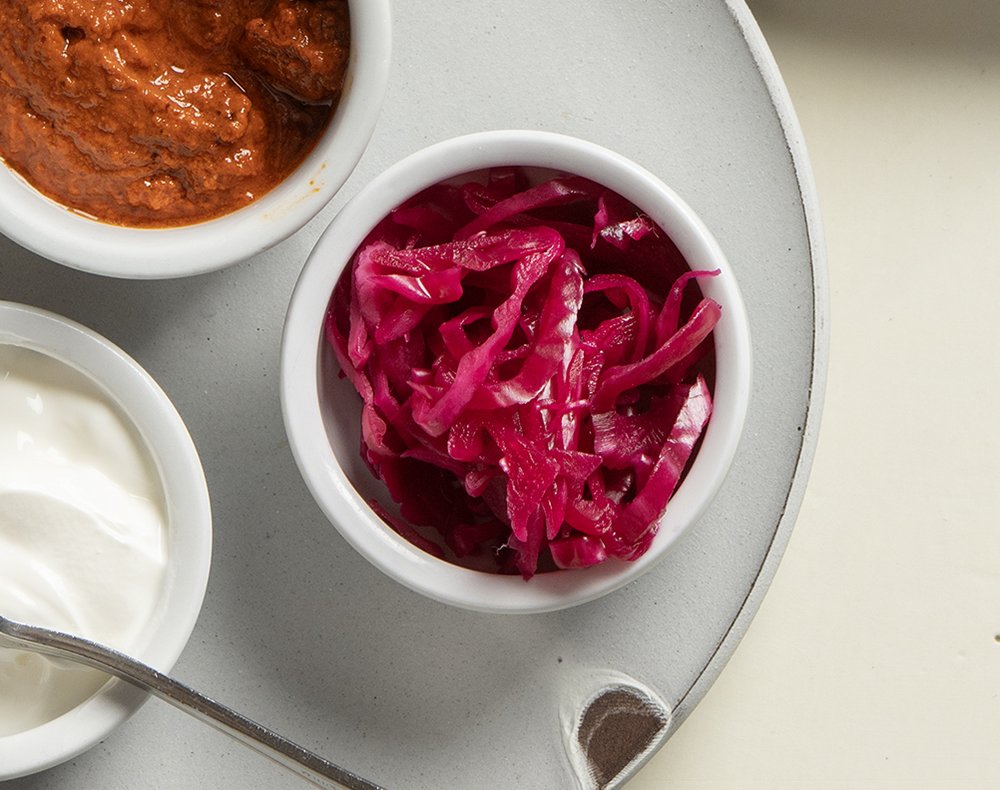
Pickling doesn’t just reduce waste and preserve food; it transforms it. Vegetables and fruits develop bright, complex flavors when paired with vinegar, salt, herbs, garlic, and spices. “We serve pickled red cabbage or corn year-round,” says Joseph. “The crunchy cabbage is one of the ingredients in our vegetable enchilada, adding a burst of flavor that makes it pop.” Some of Chef Joseph’s favorite pickling spices are mustard seed, star anise, fennel seed, and bay leaves.

Pickles also make a great side dish, bringing an upbeat note to a main course, and can provide variety when fresh local produce is less abundant. A jar of pickled veggies can enliven everything, from sandwiches and salads to charcuterie boards and tacos.
This simple skill that anyone can learn also encourages creativity. Try beets, cauliflower, peppers, even apples and watermelon rind, to brighten up a winter meal. Experiment with spices, blends, different vinegars and sugars, to create your own signature recipes. There are no rules. Fall’s cooler temperatures make it more appealing to spend time in the kitchen, cooking and preserving, so go for it, give it a try, experiment, and have fun. As Anthony Bourdain famously said, ‘Your body is not a temple, it’s an amusement park. Enjoy the ride.’
Pickled Red Cabbage
Ingredients
One red cabbage, cut in half and sliced julienne style. (This is Joseph’s standard pickling recipe for general use.)
Pickling Juice
I quart of white wine vinegar
8oz. star anise
4oz. cinnamon stick
4oz. fennel seeds
8 bay leaves
8oz. sugar
4oz. ground black pepper
Method
Place all juice ingredients in a pan, heat to a boil, and simmer for about 5 minutes. Remove from heat.
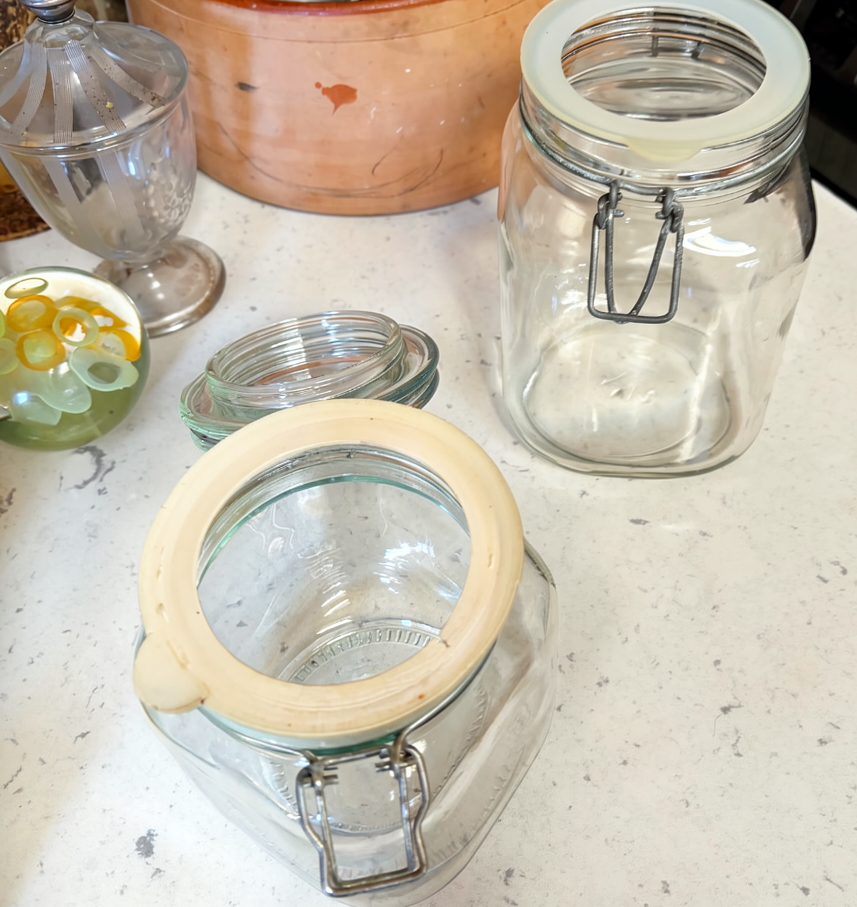
Put cut cabbage in a large pickle jar with a secure seal (see picture below) and cover with juice. Leave to sit overnight. Best after at least 3 days.
Pickles will keep in the fridge for about 2 to 3 months, but will gradually soften over time.