Celebrating Corn: A Taste of Summer
There’s something about corn that feels like summer. As chef Joseph Wrede recalls, “I grew up in Ohio, a huge agricultural state, where a popular saying was ‘Knee high by 4th. of July.’ That meant that if the locally grown corn was up to the farmers’ knees, or higher, by then, the crop was on track for a successful harvest in August.”
Even before the peak of its season, corn shows up everywhere, from farmers’ markets to local stores and big box supermarkets. Part of its attraction is due to the fact that it’s incredibly versatile, forming the backbone for countless dishes worldwide, from creamy soups and stews, to cereals, tacos, salsas, salads, baked goods, desserts... even vodka and beer.
First domesticated in Mexico over 9,000 years ago, corn was developed from a wild grass called teosinte. An unusual crop, it’s classified as both a fruit and a vegetable, as well as a grain. A massive amount of corn is still grown in Mexico, where there are 64 different varieties, but the country’s domestic appetite for both food and livestock feed is so great that it imports even more, in order to meet the demand.
The United States produces just four major types of corn, providing about 1/3 of the world’s corn supply. The only agricultural crop grown in all 50 states, about 1% is sweet corn for eating on the cob. Almost half the total harvest, most of which is now genetically modified, goes to feed farm animals, and the rest is used for industrial purposes.
Beyond food and livestock feed, corn is an essential raw material for industry, utilized in a staggering total of over 4,000 everyday products, from the production of ethanol, to bioplastics, cosmetics, paint, glue, fabrics, antibiotics and, believe it or not, fireworks.
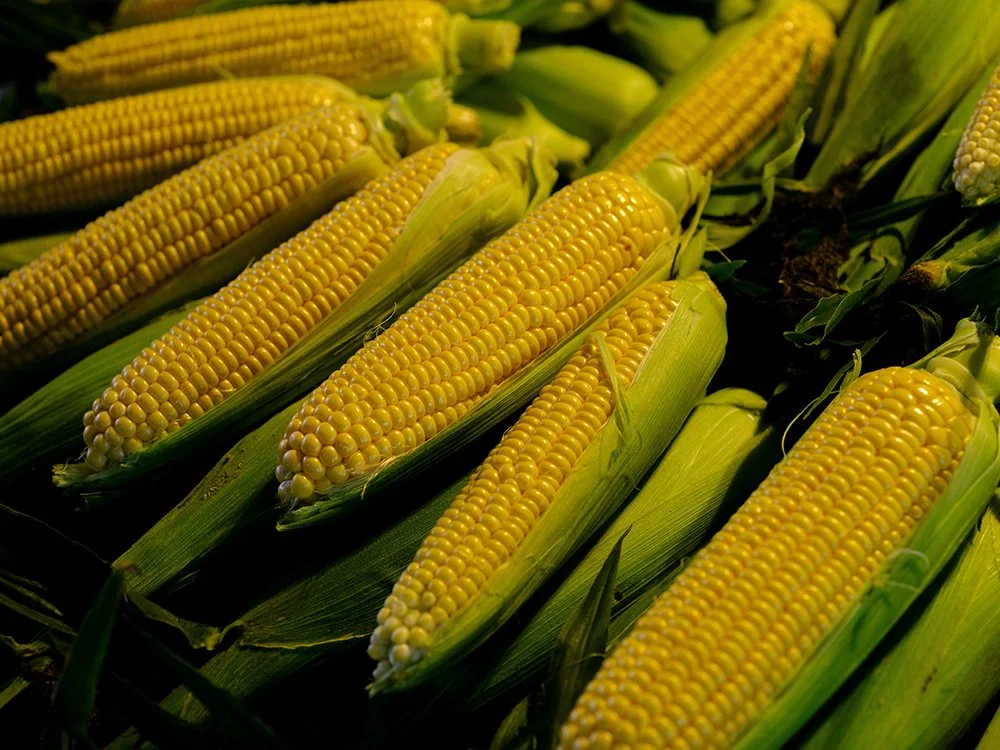
But let’s focus on the good stuff. Corn is a healthy and nutritious food, packed with fiber, vitamins, and antioxidants that support eye health and digestion in particular. As always, local is best, both for quality and taste, so it’s worth taking a trip to the farmers’ market to pick up organic produce, fresh from the farm. As chef Joseph points out, “Unlike commercially produced varieties, locally grown corn is super sweet and can even be eaten raw. It’s also great for kids who are constantly told to eat their vegetables. That was something my mother never had to remind me to do once corn was in season. It was such a welcome relief from the broccoli and peas I had endured throughout the winter.”
A buttered ear of sweet, local corn is one of the best summer treats, but corn also pairs perfectly with sweeteners, which is what inspired Joseph to come up with one of his memorable, original desserts, corn crème brulée.
Now for the fun part – popcorn! Every kernel of corn contains a small amount of trapped water, which, when heated, turns to steam and finally explodes. That explosion turns the kernel inside out, exposing the cooked, dense starch inside, that instantly cools and solidifies in the outside air. And there you have it – popcorn! FYI, the ‘pop’ is the sound of the sudden release of water vapor, like the pop of a champagne cork being released.
So whether you like your corn raw, barbecued, cooked, stewed, boiled, or popped, now is the time to make the most of this versatile gift of nature. It really is the quintessential summer dish.
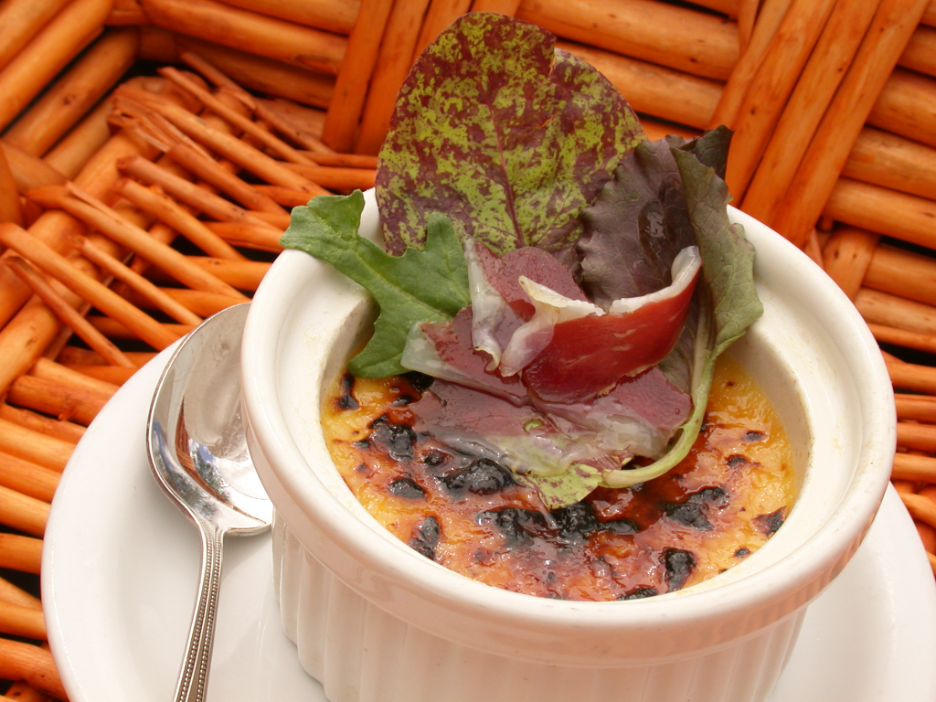
photo by Sharon Stewart
Corn Crème Brulée
Serves 7
Corn Pudding Ingredients
1tbsp. olive oil
1½ cups chopped red onion
1tbsp. minced garlic
1tbsp. minced ginger
½tsp. grated nutmeg
6 cups fresh corn kernels cut off the cob
½ cup white wine
2 cups milk
½ tsp. salt
Pinch of fresh ground black pepper
Method:
Warm a medium saucepan over high heat. Add oil, onion, garlic, ginger, nutmeg, and corn, stirring until onions and corn have started to brown.
Add wine and continue cooking over high heat until wine is absorbed.
Add milk, salt, and pepper and bring to boil while stirring. Turn heat down and simmer for 5 mins.
Put mixture into a food processor in small batches and purée for about 1 to 2 minutes per batch.
Take the puréed mixture and push it through a sieve or a strainer, using a rubber spatula or the back of a large spoon, to strain out the skin of corn kernels and onions. This assures a smooth pudding with no break in texture between the pudding and the custard.
Custard
2 cups heavy cream
1/8 cup sugar
1/3 fresh vanilla bean
3 egg yolks
26 ounces of corn pudding
Pinch of salt
Method:
Preheat oven to 350°
Put cream and vanilla bean in a pan over medium heat.
Place egg yolks and sugar in a bowl, and while whisking yolks vigorously, slowly add 8 ounces of the hot cream mixture. Pour the yolks and cream mixture back into the custard saucepan and return to high heat, whisking constantly for 2 minutes. Remove from heat.
Add corn pudding, whisking to integrate all ingredients, and return to medium heat for 1 minute. Then stop whisking and stir with a wooden spoon. Add a pinch of salt.
Lower heat to a simmer and let the foam calm down from whisking. Remove vanilla bean and cut in half lengthwise. Scrape the seeds out of the pod and stir into the custard.
Place 7 shallow-dish crème brulée tureens on a sheet tray and ladle the corn custard into the dishes (each dish should be about 4/5 full). Put the tray in the oven and add about 1/2 inch of water to the tray, creating a water bath.
Bake for about 40 minutes or until crème brulée is set to the consistency of custard.
Remove the tray from the oven and tureens from the tray. Let cool and refrigerate for at least 2 hours.
To Finish:
1¾ tsp. sugar
Sprinkle 1/4 tsp. of sugar on each dish and melt with a torch.