Pucker Up! Rhubarb is back in season.
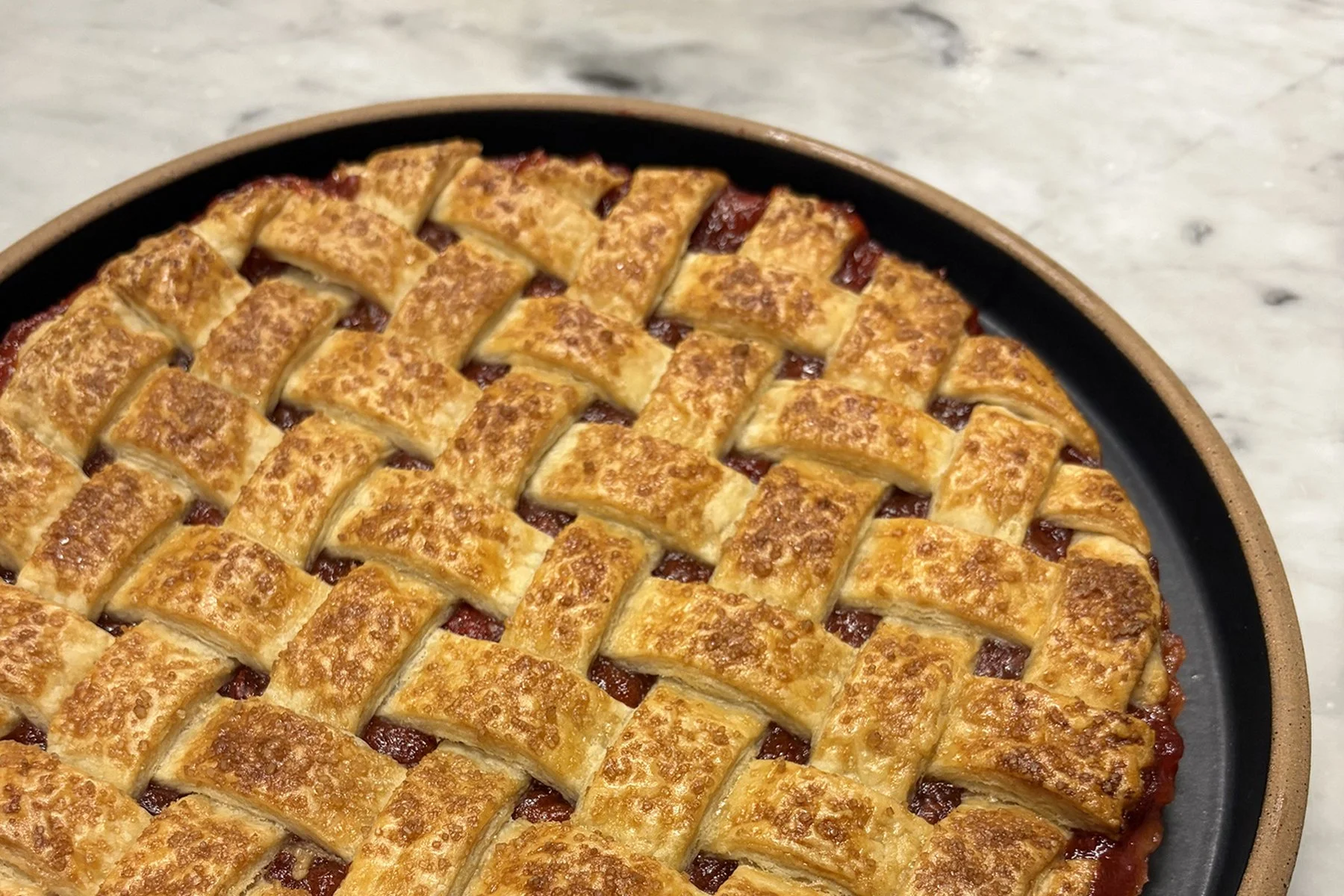
Think rhubarb, and the first thing that comes to mind is likely to be strawberry rhubarb pie. That winning combination of sweet and tart is one of summer’s best treats, but looks can be deceiving, because there is much more to rhubarb than meets the eye.
First of all, it’s botanically a vegetable, not a fruit. The reason why it doesn’t qualify as a fruit is because we eat the stalk, like celery, not the part that develops from a flower and contains the seeds. However, while botanists insist it’s a vegetable, most cooks still consider it a fruit. A New York judge tried to settle the argument back in 1947 by legally declaring it a fruit, but the discord continues to this day. Could this be why the Merriam Webster dictionary says the word ‘rhubarb’ can also mean ‘a heated dispute or controversy’?
The plant’s long history actually began with it being used for medicinal purposes, originating over 5,000 years ago with Chinese medicine. The roots were highly valued as a powerful, dried and powdered laxative and digestive aid, and were also used to treat stomach ailments, inflammation and infections.
Prized for centuries as a medicine, rhubarb did not become popular as a food until the 1800s, due to the fact that its medicinal roots were the focus, rather than the stalks. Also, the leaves themselves are not edible, since they contain high levels of oxalic acid, and are poisonous to humans and animals.
But the positives definitely outweigh the negatives. It turns out that rhubarb is very easy to grow, taking up little room and tolerating cold well. The plant is hardy, doesn’t require much care and isn’t bothered by many pests. It therefore thrives in cooler, northern climates, and Washington, Oregon, and Michigan are the top states for commercial rhubarb production in the US.
We now associate it most often with desserts, such as crumbles, pies and tarts, so much so that it is also known as ‘pie plant.’ When paired with something sweet, rhubarb not only tastes good, but it has a lot going for it, health-wise, being high in fiber, vitamins and minerals, and low in calories, fat, sodium and cholesterol. Some people like to eat the stalks fresh, simply dipped in sugar.
Less well known is the fact that rhubarb can be challenging, and many people simply don’t know what to do with it. “Rhubarb has a gourmet mystique,” says chef Joseph Wrede. “It’s beautiful, like a bunch of flowers, with a unique aroma and flavor, and its vibrant red and pink colors hold space in a dish.”
The season is short, so it’s not around for very long, but rhubarb’s tart flavor, partnered with something sweet, provides a perfect background for pies, jams, jellies, even yogurt and ice cream. It also makes excellent chutney (see recipe below) that chef Joseph likes to pair with his celebrated fish dishes. He has also served it as an accompaniment to liver mousse. “Rhubarb is both challenging and gratifying to work with,” he says. “It’s unruly, and demands serious attention, like raising a difficult child, but the results are well worth it. For me, it’s a celebration of summer.”
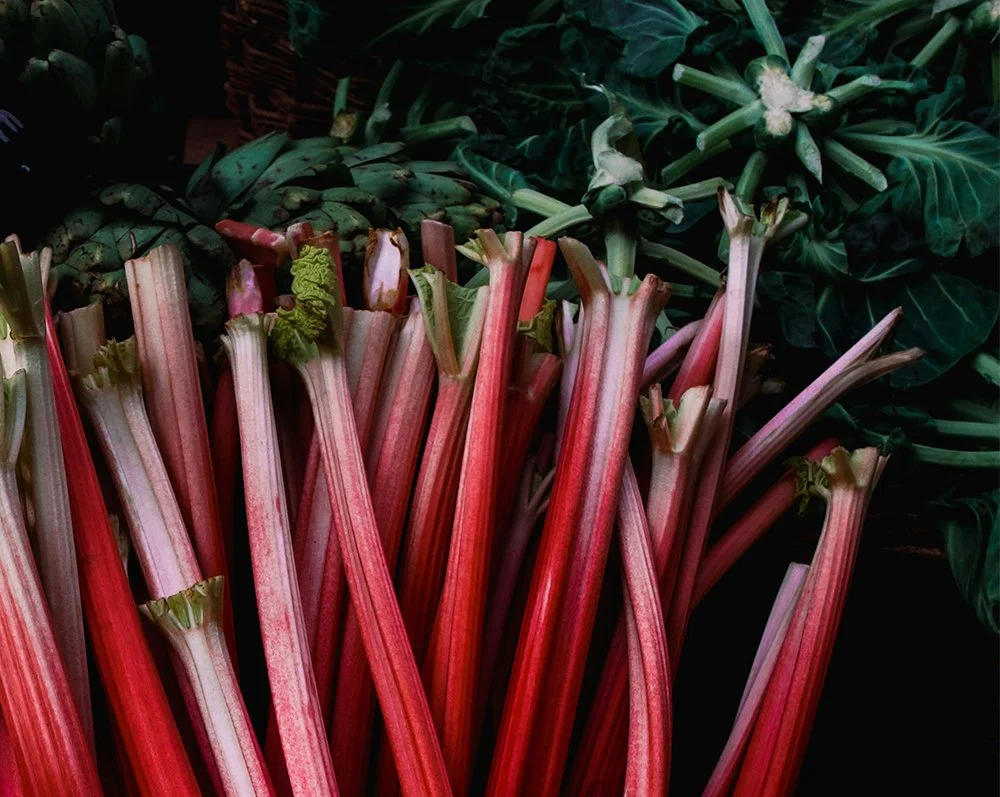
Rhubarb Chutney
Ingredients
1/2 cup sugar
1/2 cup cider vinegar
1/2 cup clear apple juice
1 cup finely diced red onion
1 cup dried cherries
3 tablespoons ginger, peeled and diced
2 tablespoons diced garlic
2 tablespoons mustard seed
5 cups rhubarb stalks, peeled and diced
Method:
Put sugar, vinegar, and apple juice in a large saucepan over medium-high heat to melt sugar.
Add onions and bring to a simmer.
Add cherries and bring back to a simmer.
Add ginger, garlic, mustard seed, and rhubarb.
Lower heat to medium and cook for 25 to 30 minutes.